
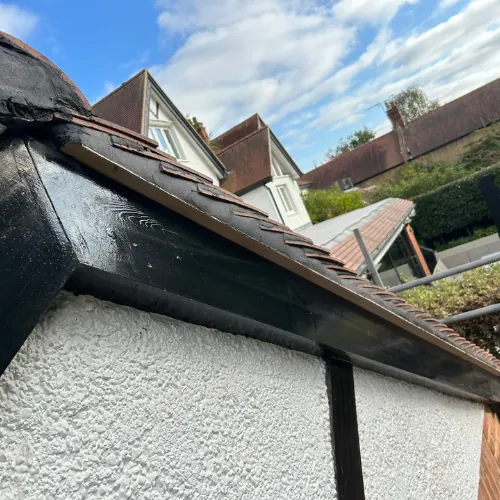
The main signs of rotten fascia are peeling or flaking paint, soft or spongy timber, dark staining and gutters that sag or leak. If a screwdriver sinks into the board, it is rotting. Here is how to check, what can be repaired and what happens if you ignore it.
What are the signs of rotten fascia?
Look for paint that bubbles, flakes or peels, and boards that look swollen, cracked or discoloured. Black or green mould along the board is a warning too. Gutters that pull away, sag or drip at the joints often point to fascia that can no longer hold them.
Another sign is daylight or small gaps where the fascia meets the soffit or the wall. You may also spot wasps or birds using holes in the board. If you see any of this, have a roofer take a closer look before the problem spreads to the roof timbers.
How to know if fascia is bad?
Use a long ladder, or better still binoculars from the ground, to inspect the boards. Gently press a screwdriver or a similar tool into the timber at a few points. Sound wood resists, while rotten wood feels soft and crumbles. Never lean out from a ladder to do this.
If your fascia is uPVC, look for cracks, warping, yellowing and loose joints. While plastic does not rot, the timber behind it can. Water running down behind the boards is a common cause, so check the gutters and downpipes while you are looking.
Need some Fascia & Soffit support? Speak with a member of our professional fascia and soffit team here
How to repair rotting fascia?
Small patches of rot can sometimes be cut out, treated with a wood hardener and filled with exterior grade filler, then sanded and painted. This is best done early, before the rot spreads through the board or into the rafter ends behind.
Larger areas, or boards that feel soft along their length, are better replaced. A roofer will remove the old board, check and treat the timber behind, fit a new board and reinstall the gutters. Ask for rot in rafter ends to be photographed and priced before work.
Can damaged fascia be fixed?
Yes, if the damage is limited. Cracked or split boards, loose joints and small rotten areas can often be repaired. If the board is warped or has widespread rot, replacing it is usually more cost effective in the long run.
| Condition | Best option |
|---|---|
| Peeling paint only | Strip, treat and repaint |
| Small soft patch | Cut out, harden, fill and repaint |
| Cracked or sagging uPVC | Replace the damaged length |
| Widespread rot or rotten rafter ends | Replace fascia and repair timbers |
A good roofer will tell you honestly whether repair or replacement makes more sense. Repairs that do not address the cause, such as leaking gutters, will not last. Always fix the water source at the same time as the board.
What happens if fascia rots?
Rotten fascia cannot support the gutters properly, so water pours down the wall instead of into the downpipe. That leads to damp, staining and sometimes rot spreading into the roof edge. Over time, tiles at the eaves can slip and the roof structure can be affected.
Pests are another problem. Rotten boards give birds, wasps and even rodents an easy way into the roof void. Replacing a few boards early is much cheaper than rebuilding the eaves, so do not leave it. Take photos and get quotes as soon as you spot trouble.
Why fascia boards rot in the first place
Most rot starts with water. Blocked or leaking gutters, failed seals at the joints and poor drainage let water sit against the timber. Sunlight and old paint add to the wear, and untreated timber soaks up moisture rapidly.
| Cause | Prevention |
|---|---|
| Blocked or leaking gutters | Clean yearly and fix leaks |
| Peeling paint | Repaint every 5 to 7 years |
| Poor ventilation behind boards | Fit vented soffits |
| Untreated timber | Prime all edges before fitting |
If your fascias are timber, a repaint every five to seven years keeps them protected. Where rot has been a repeat problem, many homeowners switch to uPVC or aluminium, which need very little maintenance and last well.
Peeling paint, soft timber, sagging gutters and dark stains are the classic signs of rotten fascia. Catch it early and a repair may do. Leave it, and you are likely to face wider damage. Ask a roofer for a proper inspection and clear photos.
What are the signs of rotten fascia?: Frequently Asked Questions
What are the signs of rotten fascia?
Peeling paint, soft or spongy timber, dark staining, sagging gutters and visible gaps are the usual signs.
How to know if fascia is bad?
Inspect from a safe position and press a screwdriver into the timber. If it sinks in or crumbles, it is rotten.
How to repair rotting fascia?
Small patches can be cut out, treated and filled. Larger areas need the board replacing and the timbers behind checked.
Can damaged fascia be fixed?
Yes, if the damage is limited. Widespread rot usually means replacement is better value.
What happens if fascia rots?
Gutters can no longer be supported, water gets in and damp and further rot can spread into the roof edge.
How long do timber fascias last?
With good maintenance, 20 to 30 years. Poor drainage and neglect can shorten this considerably.
Is rotten fascia covered by insurance?
Usually not, as rot from age or lack of maintenance is excluded. Storm damage may be covered.
Can I paint over rotten fascia?
No. Paint will not fix rot and it will quickly peel again. Treat or replace the damaged timber first.
Should I replace fascia with uPVC?
Many people do, as uPVC needs little maintenance. Check the timber behind is sound before covering it.
How do I stop fascia rotting again?
Keep gutters clear, fix leaks promptly, repaint on schedule and make sure the roof edge is ventilated.
Can rotten fascia attract pests?
Yes. Birds, wasps and rodents can use gaps in rotten boards to get into the roof void.
What is the difference between fascia and soffit?
The fascia is the board running along the roof edge that supports gutters. The soffit is the panel underneath that closes the gap to the wall.
How much does fascia repair cost?
Small repairs may be under £150, while replacing boards on a whole house can cost £800 to £2,500 or more.
Can I do fascia repairs myself?
Minor jobs are possible, but working at height is risky. Replacing boards usually needs scaffolding and removal of gutters.