
Yes, a dry verge can be fitted to an existing roof, and it is a popular upgrade when old mortar at the gable end starts to crack and fall away. The tiles need to be sound and compatible with the system. Here is how it works, what it costs and what to watch for.
Can you put a dry verge on an existing roof?
In most cases, yes. A roofer removes the old mortar and any loose tile ends, checks the battens and rafters underneath, then fits dry verge units that are fixed mechanically along the edge of the roof. It is a common retrofit on houses with tired mortar verges.
The existing tiles have to be sound and the overhang must be right. If the edge tiles are broken, uneven or too short, they may need replacing first. A good roofer will tell you straight away if the verge needs more than a simple swap.
How much does it cost to have a dry verge fitted?
For a typical gable end, many homeowners pay between £400 and £1,000, depending on length, height and the system chosen. Scaffolding often adds more, so check it is included. Larger houses with two or more gable ends cost proportionally more.
| Job | Typical UK cost |
|---|---|
| One short gable, accessible | £350 to £600 |
| Standard semi gable, both slopes | £500 to £1,000 |
| Detached with two gables | £900 to £1,800 |
| Scaffold if not already up | £400 to £800 |
These are guide prices only. Ask for a written quote that lists the product, the length being covered, scaffolding and removal of the old mortar. If the quote is just a single line, ask for more detail before agreeing.
Need some Dry Verge Roofing support? Speak with a member of our professional dry verge roofing team here
Is dry verge a good idea?
Often yes. Dry verge systems are mechanically fixed, so they are less likely to crack, fall off or let water into the roof edge than old mortar. They also reduce maintenance and are quicker to install. Many tile manufacturers recommend them for exposed locations.
They are not perfect, though. Cheap plastic units can fade or become brittle, and fitting standards vary. Choose a recognised brand that suits your tiles, and ask your roofer how it will be fixed and what guarantee comes with it.
Can a drip edge be added to an existing roof?
A drip edge, or eaves and verge trim, can usually be added if the roof edge is sound. It helps direct water into the gutter and away from the fascia. At the verge, a dry verge system does a similar job by sealing the edge and ventilating the roof.
Make sure the roofer checks the felt and battens at the edge. A drip edge on top of damaged underlay will not stop leaks. If the fascia or soffit is also rotten, it makes sense to fix them in the same visit to avoid paying for scaffolding twice.
How long will the roof last with a dry verge?
A properly fitted dry verge should last 25 years or more, though this depends on the product and exposure. It protects the edge of the roof from wind and rain, which are the main causes of failure on older mortar verges.
The roof itself will last as long as the tiles and underlay, typically 40 to 60 years for concrete or clay tiles. A good dry verge removes one of the usual weak points, but you still need to check it every year or two for loose clips or cracked units.
What a good retrofit looks like
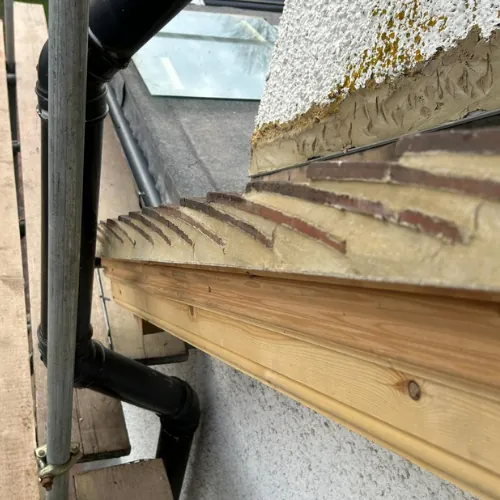
The old mortar and loose debris should be removed cleanly, with any broken tiles replaced. The verge units are fixed securely to the batten or rafter, with each joint aligned neatly and sealed at the ridge and eaves. The edge should look straight and firm.
Ask for photos before and after. A tidy dry verge should have no gaps and no signs of mortar left behind, and the end caps should be fitted firmly. If something looks wrong, it is much easier to correct it while the scaffold is still up.
A dry verge can usually be fitted to an existing roof, and it is a durable fix for crumbling mortar. Expect to pay a few hundred to a thousand pounds for a typical gable. Choose a known product, check the tiles are sound and insist on photos.
Can you put a dry verge on an existing roof?: Frequently Asked Questions
Can you put a dry verge on an existing roof?
Yes, as long as the existing tiles and battens are sound. Old mortar is removed and the dry verge system is fixed mechanically.
How much does it cost to have a dry verge fitted?
Typically £400 to £1,000 for a standard gable end, plus scaffolding if it is not already in place.
What is the lifespan of a roof with a dry verge?
A quality dry verge can last 25 years or more. The roof itself will usually last longer, depending on the tiles.
Is dry verge a good idea?
Usually yes, as it is mechanically fixed and avoids cracking mortar. Quality of product and fitting matter.
Can a drip edge be added to an existing roof?
Yes, if the roof edge is sound. It directs water into the gutter and protects the fascia.
Does dry verge look different from a mortar verge?
Slightly. The plastic cap has a cleaner, more uniform look, which some people prefer and others find less traditional.
Will dry verge work on all roof tiles?
Most systems suit common concrete and clay tiles, but fit depends on the profile. Check compatibility with the manufacturer.
Do dry verges let the roof breathe?
Many include ventilation channels, which help reduce condensation in the roof space. Ask your installer what the product offers.
Can I fit a dry verge in winter?
Yes, as no mortar is needed. Wet and windy weather can delay work, but there is no curing time to worry about.
How long does it take to fit a dry verge?
A standard house often takes one day, plus time to put up scaffolding if needed.
Will a dry verge stop wind damage?
It reduces the risk by fixing the edge tiles mechanically. It does not make a roof storm proof, so keep other areas in good repair.
Can old mortar be repaired instead?
Yes, if the tiles are secure. Repointing is cheaper but usually needs repeating every 10 to 15 years.
Do I need building regulations approval for a dry verge?
Usually not for a like for like repair, but fixings should comply with relevant standards. Your roofer can confirm.
Will a dry verge add value to my house?
It will not add much on its own, but it removes a visible maintenance issue and keeps the roof edge tidy for buyers.